
Share this Article
Share this Article
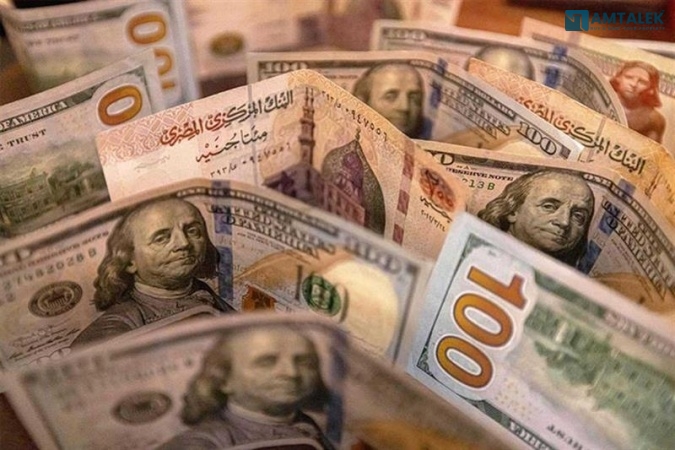
Dollar price in Saudi Arabia today Monday 21/09/2026
Banks
Share on
Copy Link
Download Options
Dollar price in Saudi Arabia today Monday 21/09/2026
Date: Monday 21/09/2026
Welcome to Amtalek's daily currency market report for Saudi Arabia. As we begin the trading week on Monday, September 21, 2026, the financial markets in the Kingdom are closely observing global economic indicators and their potential impact on local exchange rates. Today, the focus remains firmly on the Dollar price in Saudi Arabia today, which continues its established stability against the Saudi Riyal. This stability is a cornerstone of the Kingdom's economic policy, providing a predictable environment for trade, investment, and daily transactions. Understanding the dynamics of the United States Dollar (USD) against the Saudi Riyal (SAR) is crucial for businesses, expatriates, and individuals alike, as it underpins a significant portion of the Kingdom's financial interactions with the global economy. This report will delve into the current exchange rates, key influencing factors, and the overall outlook for currency prices in Saudi Arabia.
USD to SAR Exchange Rate Today
The Saudi Riyal's exchange rate against the US Dollar is a subject of consistent interest, yet its value remains remarkably stable due to a long-standing monetary policy. The Saudi Central Bank (SAMA) maintains a fixed peg between the Saudi Riyal and the US Dollar, a policy that has been in place for decades. This strategic decision aims to provide economic stability, facilitate international trade, and manage inflation within the Kingdom. As of today, Monday, September 21, 2026, the official USD to SAR exchange rate stands firm at 3.7500 Saudi Riyals for every one US Dollar. This peg means that while other global currencies may experience daily fluctuations against the dollar, the riyal's value against the greenback remains largely constant, offering a high degree of predictability for financial planning.
While the USD/SAR rate is fixed, the exchange rates of other major global currencies against the Saudi Riyal naturally fluctuate based on their respective movements against the US Dollar. These daily changes are influenced by a myriad of international economic factors, including interest rate differentials, geopolitical events, commodity prices, and market sentiment. To provide a comprehensive overview of the current currency landscape in Saudi Arabia, the following table presents the exchange rates for a selection of key international currencies against the Saudi Riyal:
| العملة | السعر بالريال السعودي |
|---|---|
| الدولار الأمريكي (USD) | 3.7500 |
| اليورو (EUR) | 4.3039 |
| الجنيه الإسترليني (GBP) | 5.0173 |
| الدينار الكويتي (KWD) | 12.147 |
| الدينار البحريني (BHD) | 9.9734 |
| الريال العماني (OMR) | 9.7530 |
| الدينار الأردني (JOD) | 5.2891 |
| الريال القطري (QAR) | 1.0302 |
| الدرهم الإماراتي (AED) | 1.0211 |
| الجنيه المصري (EGP) | 0.0721 |
Major Currencies Against the Saudi Riyal
Analyzing the provided table gives us a clear picture of how various international currencies stack up against the Saudi Riyal today. As expected, the US Dollar maintains its 3.7500 peg. However, when looking at other global currencies, significant differences in value become apparent, reflecting their individual strengths and weaknesses in the broader international market. The table illustrates a spectrum of currency prices in Saudi Arabia, offering valuable insights for cross-border transactions.
Among the strongest currencies listed against the Saudi Riyal, the Kuwaiti Dinar (KWD) stands out prominently, trading at 12.147 SAR. This robust valuation is a consistent feature of the Kuwaiti Dinar, often making it one of the world's highest-valued currencies. Following closely are the Bahraini Dinar (BHD) at 9.9734 SAR and the Omani Rial (OMR) at 9.7530 SAR. These Gulf currencies, like the Saudi Riyal, often benefit from strong economic foundations, particularly in the oil and gas sectors, and often maintain their own stable relationships with major global currencies or baskets thereof.
Other significant currencies, such as the British Pound (GBP) and the Euro (EUR), also command a higher value than the Saudi Riyal. The Pound Sterling is trading at 5.0173 SAR, while the Euro is at 4.3039 SAR. Their values reflect the economic conditions and monetary policies within the Eurozone and the United Kingdom, respectively. The Jordanian Dinar (JOD) also shows a strong position at 5.2891 SAR, indicative of its own economic stability and regional standing.
On the other end of the spectrum, some currencies trade at a significantly lower value compared to the Saudi Riyal. The Egyptian Pound (EGP), for instance, is valued at 0.0721 SAR, reflecting ongoing economic adjustments and market dynamics in Egypt. The Qatari Riyal (QAR) and UAE Dirham (AED) maintain a near-parity with the Saudi Riyal, at 1.0302 SAR and 1.0211 SAR respectively. This close alignment is largely due to their own pegs to the US Dollar and strong economic ties and integration within the GCC region, making cross-border trade and travel relatively stable and predictable.
Factors Affecting Exchange Rates in Saudi Arabia
While the dollar price in Saudi Arabia today remains fixed, several overarching factors influence the broader landscape of currency exchange rates within the Kingdom, especially for currencies not pegged to the USD. Understanding these elements is crucial for anyone engaging in international finance or trade.
- The Riyal-Dollar Peg and SAMA Monetary Policy: The most significant factor is the Saudi Central Bank's (SAMA) commitment to pegging the Saudi Riyal to the US Dollar at 3.75. This policy means that SAMA actively manages its foreign reserves and intervenes in the market to maintain this fixed rate. The peg is a strategic tool to ensure macroeconomic stability, control inflation, and provide certainty for investors and businesses. Any change to this long-standing policy would have profound implications, but SAMA has consistently reaffirmed its commitment to the peg.
- US Federal Reserve Interest Rate Decisions: Given the riyal's peg to the dollar, interest rate decisions by the US Federal Reserve have a direct and significant impact on Saudi Arabia's monetary policy. When the Fed raises or lowers interest rates, SAMA typically follows suit to maintain the interest rate differential necessary to support the peg. These decisions affect borrowing costs, investment flows, and the overall liquidity in the Saudi banking system, indirectly influencing the strength of the dollar and, by extension, other currencies against the riyal.
- Oil Prices and Saudi Export Revenues: As one of the world's largest oil exporters, Saudi Arabia's economy is heavily influenced by global oil prices. Higher oil prices generally lead to increased export revenues, bolstering the Kingdom's foreign currency reserves and strengthening its fiscal position. This economic robustness supports SAMA's ability to maintain the riyal's peg and contributes to overall confidence in the Saudi economy, which can indirectly affect how other currencies perform against the riyal. Conversely, sustained low oil prices can put pressure on reserves, though the Kingdom's substantial financial buffers provide significant resilience.
- Inflation and Global Economic Conditions: Inflationary pressures, both domestically and internationally, play a role in currency valuations. While the peg mitigates direct inflationary impacts from the USD, global inflation can affect the purchasing power of other currencies, thereby altering their exchange rates against the stable Saudi Riyal. Broader global economic conditions, such as recessions or periods of strong growth in major economies, also influence demand for various currencies and their relative strengths.
- Trade Balance and Foreign Investment Flows: Saudi Arabia's trade balance, which measures the difference between its exports and imports, is a key determinant of foreign currency supply and demand. A healthy trade surplus, driven by strong oil and non-oil exports, brings more foreign currency into the Kingdom, supporting the riyal's stability. Similarly, foreign direct investment (FDI) inflows contribute to foreign exchange reserves and signal confidence in the Saudi economy, further reinforcing the stability of currency prices in Saudi Arabia.
Outlook
Looking ahead, the outlook for the Dollar price in Saudi Arabia today remains anchored by the Saudi Central Bank's unwavering commitment to its peg against the US Dollar. This fundamental policy ensures that the USD to SAR exchange rate will continue to exhibit remarkable stability at 3.7500 for the foreseeable future, providing a predictable environment for all economic actors within the Kingdom. This stability is a key pillar of Saudi Arabia's economic strategy, facilitating long-term planning for businesses, investors, and individuals.
For other major global currencies, their values against the Saudi Riyal will continue to be determined by their performance relative to the US Dollar in international markets. Factors such as global economic growth, central bank monetary policies (particularly those of the European Central Bank, Bank of England, and others), geopolitical developments, and commodity price trends will drive these fluctuations. While the Saudi Riyal itself is insulated from direct volatility against the dollar, its cross rates with currencies like the Euro, Pound Sterling, and various regional Gulf currencies will naturally adjust in response to these international dynamics.
Amtalek will continue to monitor these developments closely, providing timely and accurate updates on currency prices in Saudi Arabia to help our readers stay informed. The stable dollar price in Saudi Arabia today underscores a consistent monetary approach designed to foster economic resilience and growth.
This service is provided by Amtalek Realestate Platform
Latest News
No news available