
Share this Article
Share this Article
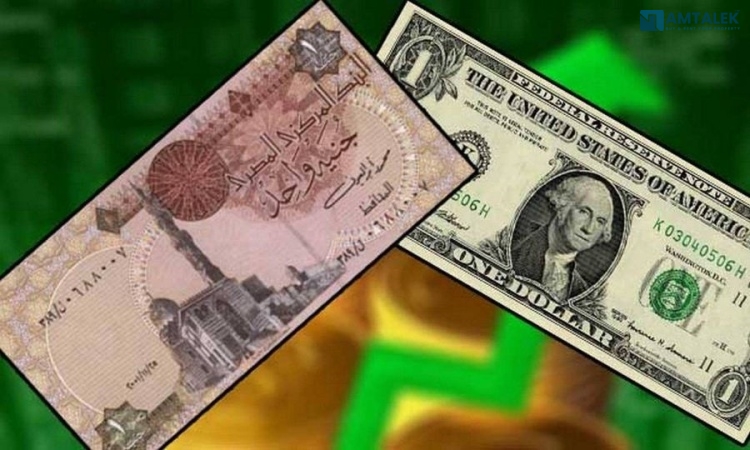
Dollar price in Saudi Arabia today Sunday 20/09/2026
Banks
Share on
Copy Link
Download Options
Dollar price in Saudi Arabia today Sunday 20/09/2026
As the financial week commences on Sunday, September 20, 2026, market participants and individuals across Saudi Arabia are keenly observing the latest currency exchange rates. The Dollar price in Saudi Arabia today remains a primary point of interest, given its fundamental role in the Kingdom's economic landscape. Today, the US Dollar (USD) maintains its steadfast position against the Saudi Riyal (SAR) at a rate of 3.7500. This stable valuation is a cornerstone of Saudi Arabia's monetary policy, providing a predictable environment for trade, investment, and daily transactions.
Amtalek is pleased to provide this comprehensive daily update on currency prices in Saudi Arabia, offering insights into the dynamics of major global currencies against the Saudi Riyal. Understanding these rates is crucial for businesses engaged in international trade, expatriates sending remittances, and individuals planning foreign travel or investments. Our report aims to deliver clear, accurate, and timely information to help you navigate the currency market with confidence.
USD to SAR Exchange Rate Today: A Pillar of Stability
The stability of the Saudi Riyal against the US Dollar is a defining characteristic of Saudi Arabia's financial system. The Saudi Central Bank (SAMA) has maintained a fixed peg of the Saudi Riyal to the US Dollar for decades, typically at a rate of 3.75 SAR for every 1 USD. This policy is a strategic choice designed to foster economic stability, manage inflation, and encourage foreign investment by eliminating exchange rate volatility for the Kingdom's primary trading currency. Consequently, the USD to SAR exchange rate rarely deviates from this fixed point, offering a high degree of predictability for all economic actors within the Kingdom.
This peg means that fluctuations in the global value of the US Dollar against other major currencies will indirectly influence the Saudi Riyal's value against those same currencies. For instance, if the Euro strengthens against the US Dollar, it will also effectively strengthen against the Saudi Riyal, maintaining the relative value of the SAR to the USD. This mechanism is vital for understanding the broader currency prices in Saudi Arabia, as the US Dollar acts as the benchmark.
Below is a detailed table outlining the exchange rates of the US Dollar and several other major global currencies against the Saudi Riyal as of Sunday, September 20, 2026:
| العملة | السعر بالريال السعودي |
|---|---|
| الدولار الأمريكي (USD) | 3.7500 |
| اليورو (EUR) | 4.3040 |
| الجنيه الإسترليني (GBP) | 5.0138 |
| الدينار الكويتي (KWD) | 12.128 |
| الدينار البحريني (BHD) | 9.9734 |
| الريال العماني (OMR) | 9.7530 |
| الدينار الأردني (JOD) | 5.2891 |
| الريال القطري (QAR) | 1.0302 |
| الدرهم الإماراتي (AED) | 1.0211 |
| الجنيه المصري (EGP) | 0.0719 |
Major Currencies Against the Saudi Riyal
Examining the provided table reveals interesting insights into the relative strengths of various global currencies against the Saudi Riyal. As always, the US Dollar serves as the baseline, with its value fixed at 3.7500 SAR, providing a stable reference point for all other conversions. For those tracking the currency prices in Saudi Arabia, understanding these relationships is key.
Among the GCC currencies, the Kuwaiti Dinar (KWD) stands out as significantly strong, trading at 12.128 SAR. This reflects Kuwait's robust economic standing and oil wealth. Following closely are the Bahraini Dinar (BHD) at 9.9734 SAR and the Omani Rial (OMR) at 9.7530 SAR, both demonstrating considerable strength against the Saudi Riyal. These strong regional currencies often reflect deep economic ties and similar financial policies within the Gulf Cooperation Council.
Looking at major international currencies, the British Pound (GBP) is valued at 5.0138 SAR, indicating its strength relative to the Riyal and, by extension, the US Dollar. The Euro (EUR) also commands a significant exchange rate at 4.3040 SAR. These figures are influenced by a myriad of factors, including the economic health of the Eurozone and the UK, their respective central bank policies, and global market sentiment.
In contrast, some currencies show a weaker position against the Saudi Riyal. The Egyptian Pound (EGP), for example, is trading at 0.0719 SAR. This lower valuation often reflects the specific economic conditions and monetary policies within Egypt. Other regional currencies like the Qatari Riyal (QAR) at 1.0302 SAR and the UAE Dirham (AED) at 1.0211 SAR trade very close to the Saudi Riyal, which is expected given their own pegs to the US Dollar and strong economic integration within the GCC.
The Jordanian Dinar (JOD) is another currency of interest, trading at 5.2891 SAR. This relatively strong position underscores Jordan's economic stability in the Levant region. The overall picture painted by these currency prices in Saudi Arabia highlights the diverse economic forces at play globally, all filtered through the stable anchor of the Saudi Riyal's peg to the US Dollar.
Factors Affecting Exchange Rates in Saudi Arabia
While the Dollar price in Saudi Arabia today remains fixed due to the peg, several factors influence the broader currency landscape and the Kingdom's economic stability, which in turn underpins the peg itself. Understanding these elements is crucial for a complete picture of currency prices in Saudi Arabia.
The Riyal-Dollar Peg and SAMA Monetary Policy
The most significant factor is the Saudi Central Bank's (SAMA) unwavering commitment to the Riyal-Dollar peg. This fixed exchange rate policy is a cornerstone of Saudi Arabia's monetary strategy, aimed at providing predictability for international trade, managing inflation, and attracting foreign investment. SAMA actively manages the Kingdom's foreign reserves to defend this peg, intervening in the market when necessary to ensure the USD to SAR exchange rate remains stable. This policy isolates the Saudi economy from direct exchange rate volatility against the US Dollar, but it also means that Saudi Arabia's monetary policy decisions are closely tied to those of the US Federal Reserve.
US Federal Reserve Interest Rate Decisions
Although the Saudi Riyal is pegged to the US Dollar, decisions made by the US Federal Reserve have a profound indirect impact on Saudi Arabia. When the Fed raises or lowers interest rates, SAMA often mirrors these changes to maintain the attractiveness of Saudi assets and prevent capital outflows. Higher US interest rates can make dollar-denominated assets more appealing, potentially putting pressure on currencies globally. For Saudi Arabia, adjusting its own rates helps to mitigate such pressures and reinforce the peg's credibility. These decisions affect borrowing costs, investment flows, and ultimately, the overall economic environment that supports the stable Dollar price in Saudi Arabia today.
Oil Prices and Saudi Export Revenues
Saudi Arabia is the world's largest oil exporter, making oil prices a critical determinant of the Kingdom's economic health. Higher oil prices translate into increased government revenues, bolstering foreign reserves and strengthening the government's fiscal position. This financial strength provides SAMA with ample resources to defend the currency peg and maintain economic stability. Conversely, sustained low oil prices can strain government finances and reserves, although the Kingdom's substantial reserves provide a significant buffer. The impact of oil revenues is far-reaching, influencing public spending, economic development projects, and overall market confidence, all of which indirectly support the USD to SAR exchange rate.
Inflation and Global Economic Conditions
Global economic conditions and inflationary pressures also play a role. While the peg helps to import some of the US's inflation or deflation, Saudi Arabia's domestic inflation rates are also influenced by global commodity prices, supply chain dynamics, and local demand. High inflation could erode purchasing power and potentially put long-term pressure on the peg if not managed effectively. Global economic slowdowns or booms impact demand for oil, foreign investment flows into the Kingdom, and the overall sentiment towards emerging markets, including Saudi Arabia. These broader economic forces influence the relative strength of other currencies against the Riyal, even if the Dollar price in Saudi Arabia today remains fixed.
Trade Balance and Foreign Investment Flows
Saudi Arabia's trade balance, driven primarily by oil exports, is a major source of foreign currency inflows. A robust trade surplus ensures a steady supply of foreign exchange, which is essential for maintaining the peg and financing imports. Foreign direct investment (FDI) and portfolio investment also contribute significantly to the flow of capital. Strong FDI indicates international confidence in the Saudi economy and its Vision 2030 initiatives, bringing in foreign currency and supporting economic growth. Conversely, a decline in foreign investment or a significant deficit in the trade balance could, in theory, put pressure on the currency reserves, though this is carefully managed by SAMA to ensure the stability of currency prices in Saudi Arabia.
Outlook
Looking ahead, the outlook for the Dollar price in Saudi Arabia today and in the foreseeable future remains consistent with the Kingdom's established monetary policy. The Saudi Riyal's peg to the US Dollar is expected to be maintained, ensuring continued stability for the USD to SAR exchange rate at 3.7500. This unwavering commitment by the Saudi Central Bank provides a strong foundation for businesses and individuals operating within the Kingdom.
While the US Dollar's value against the Saudi Riyal is fixed, other major global currencies will continue to fluctuate against the Riyal based on their performance relative to the US Dollar. Factors such as global economic growth, central bank policies in the Eurozone and the UK, geopolitical developments, and commodity prices will influence the movement of currencies like the Euro, British Pound, and others against the stable Saudi Riyal. Investors and individuals should monitor these broader global economic trends to understand the potential shifts in currency prices in Saudi Arabia for non-pegged currencies. The Kingdom's strong economic fundamentals, coupled with prudent fiscal and monetary policies, are expected to support this stable currency environment going forward.
This service is provided by Amtalek Realestate Platform
Latest News
No news available